Ascending Deansgate-Castlefield, Manchester
A journey through Manchester’s Deansgate-Castlefield, told from the perspective of the author. Become a Reader and Listener for the next 12 minutes.
On my commute to the heart of Manchester, Deansgate-Castlefield is the first stop. At an unfathomable height, a figure can be seen crossing been two skyscrapers. A high wire. The spirit of the skyline captures the imagination. In recent years, Manchester has been touted as the fastest growing city in Europe. My first months living in Manchester brought me to this exact spot. In late 2005, the Manchester School of Architecture escorted its first-year cohort to the Deansgate-Castlefield basin. My first architecture project. I designed a house for a writer, consisting of three overlapping semi-spheres, reminiscent of the ubiquitous Igloo built by the Inuit (or Eskimo).
After an extended period of hibernation, marked by the global pandemic, our author is getting cold feet. In the modern age, you can perch virtually anywhere with a notebook, for the price of an average coffee (£3 in the UK according to Jeremy Hunt, the last time I checked). In my immediate locality, numerous co-working enterprises, complete with heated desks, have taken root. My recent stint at the coworking venture Department Campfield (and for exactly 100 days) brought me back to Deansgate-Castlefield in a meaningful way for the first time in decades. Alighting at Deansgate-Castlefield Metrolink Station, the first thing you notice is the sheer number of buildings being simultaneously constructed.
At an unfathomable height, a figure can be seen crossing been two skyscrapers.
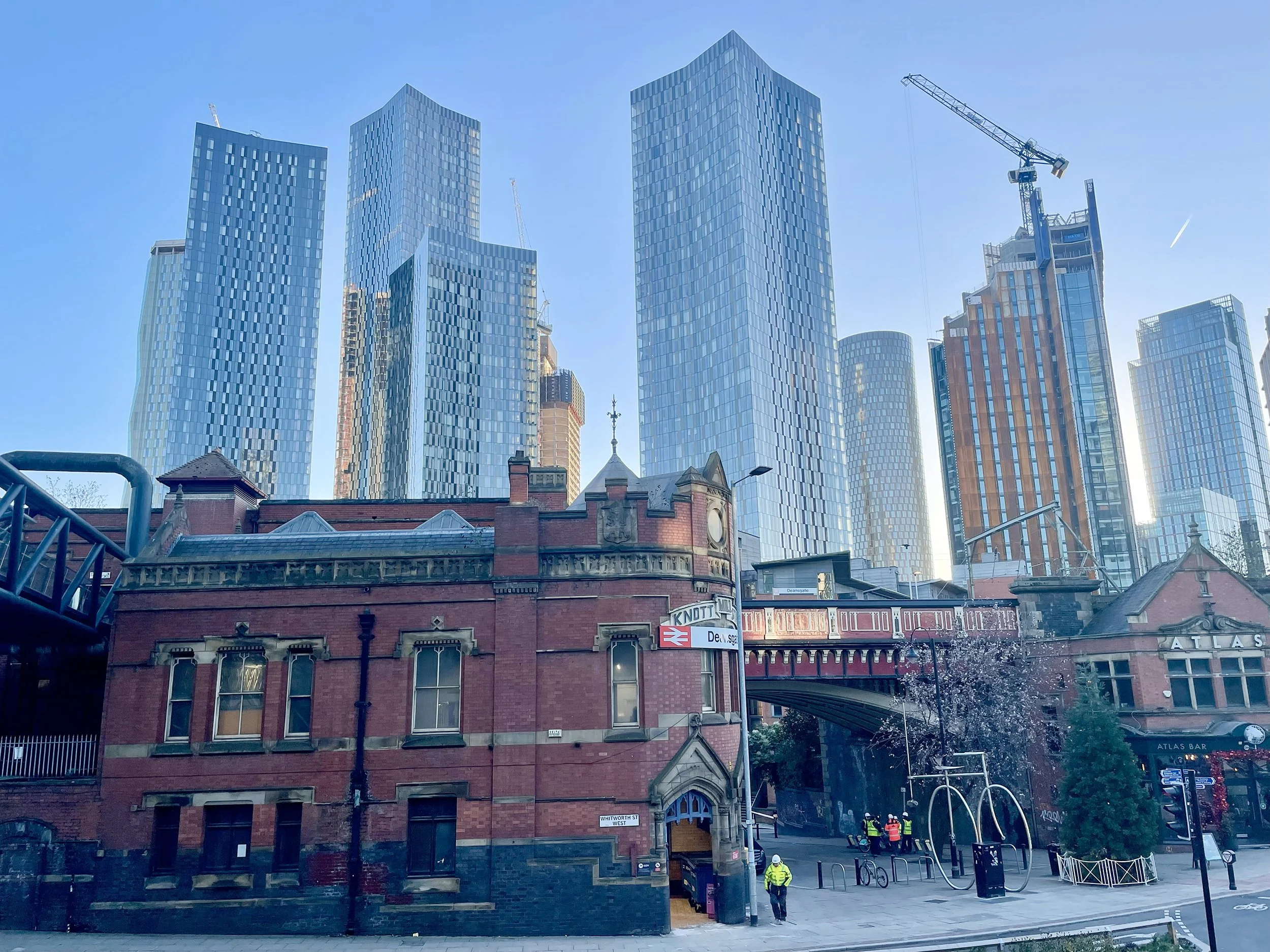
Up until around 2018, not a single one of these skyscrapers existed.
Campfield itself occupies several redeveloped buildings historically connected to Manchester’s Science and Industry Museum. The longstanding Air and Space Hall is now home to Department Campfield – who offer coworking facilities, with a clientele that largely supports a burgeoning tech industry in the UK. The joy of working from Campfield for 100 days was in its sheer abundance of open space and ambient natural light. At least half of the time, it makes sense to step outside of the Igloo.
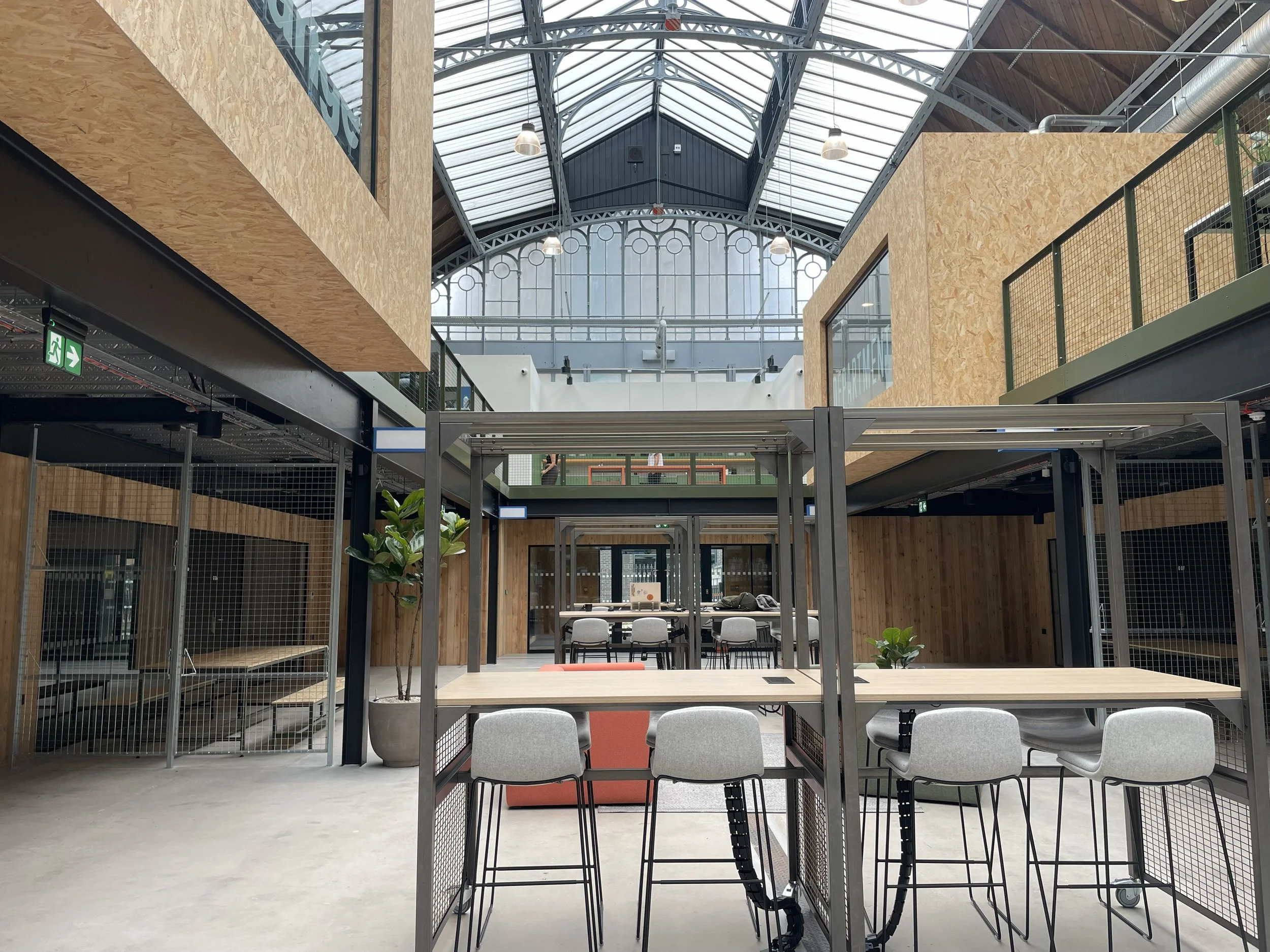
The sense of space at Campfield is ideal for daydreaming and ‘thinking big’.
On the doorstep of Campfield, at the intersection of Liverpool Road and Lower Byron Street, lies Deansgate-Castlefield’s historic Roman Fort, where new discoveries are recently being made. This ancient site is thought to be first settlement that birthed Manchester (or ‘Mamucium’ as the Romans called it). What better place to take a group of Architecture students, other than the place where it all started? Further down the street, the Beetham Tower (constructed 2005, Ian Simpson) rises ominously above all those who dare pass in its shadow. Next, if you allow yourself to be carried by the commercial linearity of Deansgate, heading directly into Manchester City Centre, you’ll soon notice the Great Northern Warehouse on your right.
The Great Northern Warehouse, which outwardly appears to resemble a leisure complex, in actuality contains a subtle mixture of commercial and artistic-leaning enterprises. The lesser known Deansgate Terrace (marked ‘Deansgate Ter’ on Google Maps) runs parallel to Deansgate and is an elevated split-level walkway. Starting directly across the street from the Beetham Tower, exactly 24 steps (a suspicious number) climb upward, flanked by some hardy small independent businesses, along with the ubiquitous Odeon cinema.
The Great Northern Warehouse, which outwardly appears to resemble a leisure complex, in actuality contains a subtle mixture of commercial and artistic-leaning enterprises.
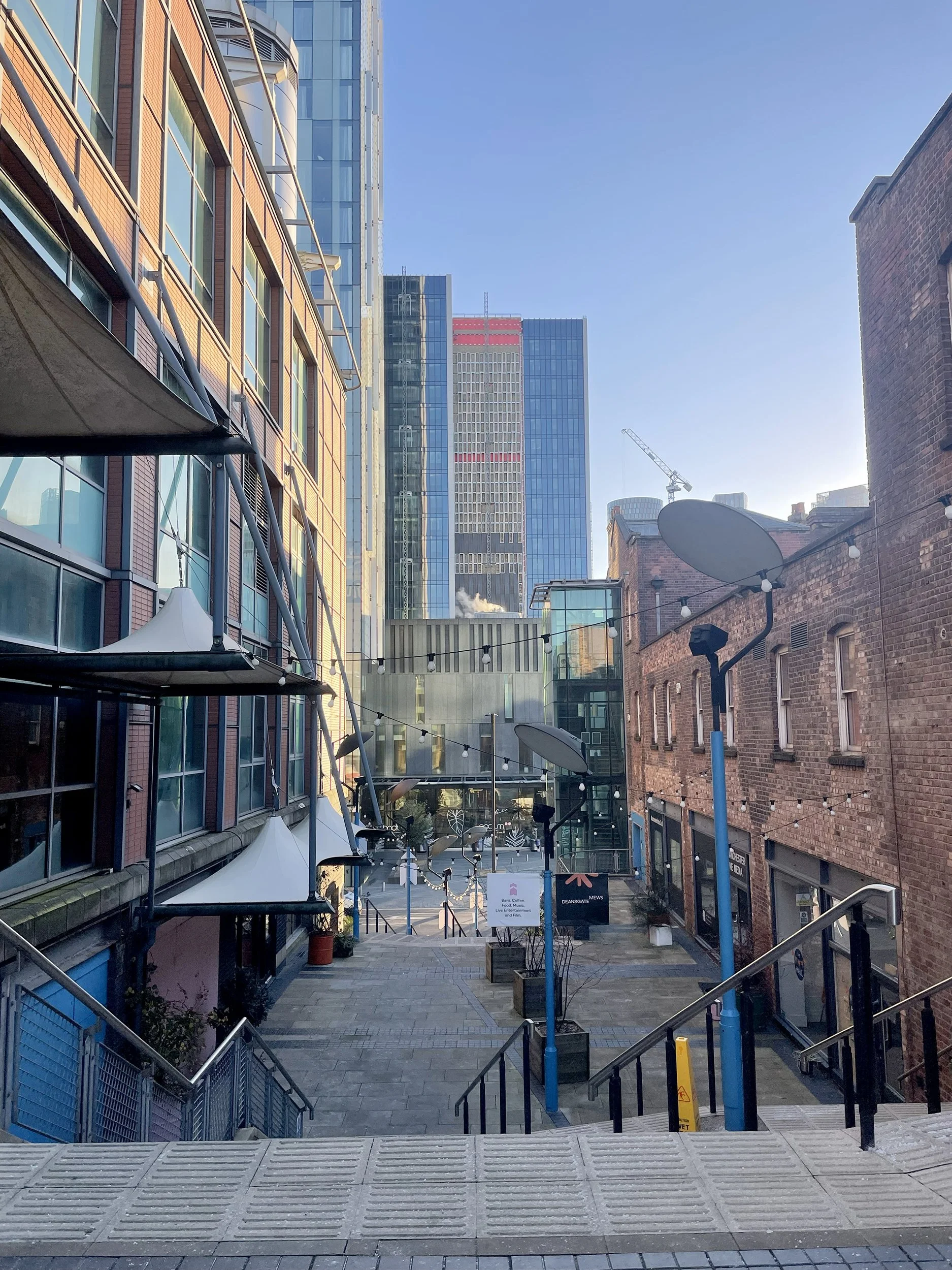
Looking down Deansgate Terrace, towards the foot of Beetham Tower (currently Manchester’s third tallest building).
Climbing the steps of the ‘Ter’ in search of the Odeon cinema, one can become easily lost. By taking a late turn and entering directly into the heart-space of the Great Northern Warehouse, you will be confronted by great icy stalactites, which hang impressively above the cavernous foyer spaces. Only today, the entrance to the cinema has been blocked off with icy bricks. In search of a new home, our writer-Eskimo has found the perfect climate.
On the second floor of the warehouse, leading away from the now redundant atrium (a sanctuary for table tennis pros) stand a pair of aquamarine steel doors bearing the name ‘GRIT Studios’. Departing Campfield at the terminus of 100 days, my continued curiosity for Deansgate-Castlefield carried my weary-working-away-from-home-body to the doors of GRIT. What lives behind those steely blue doors?
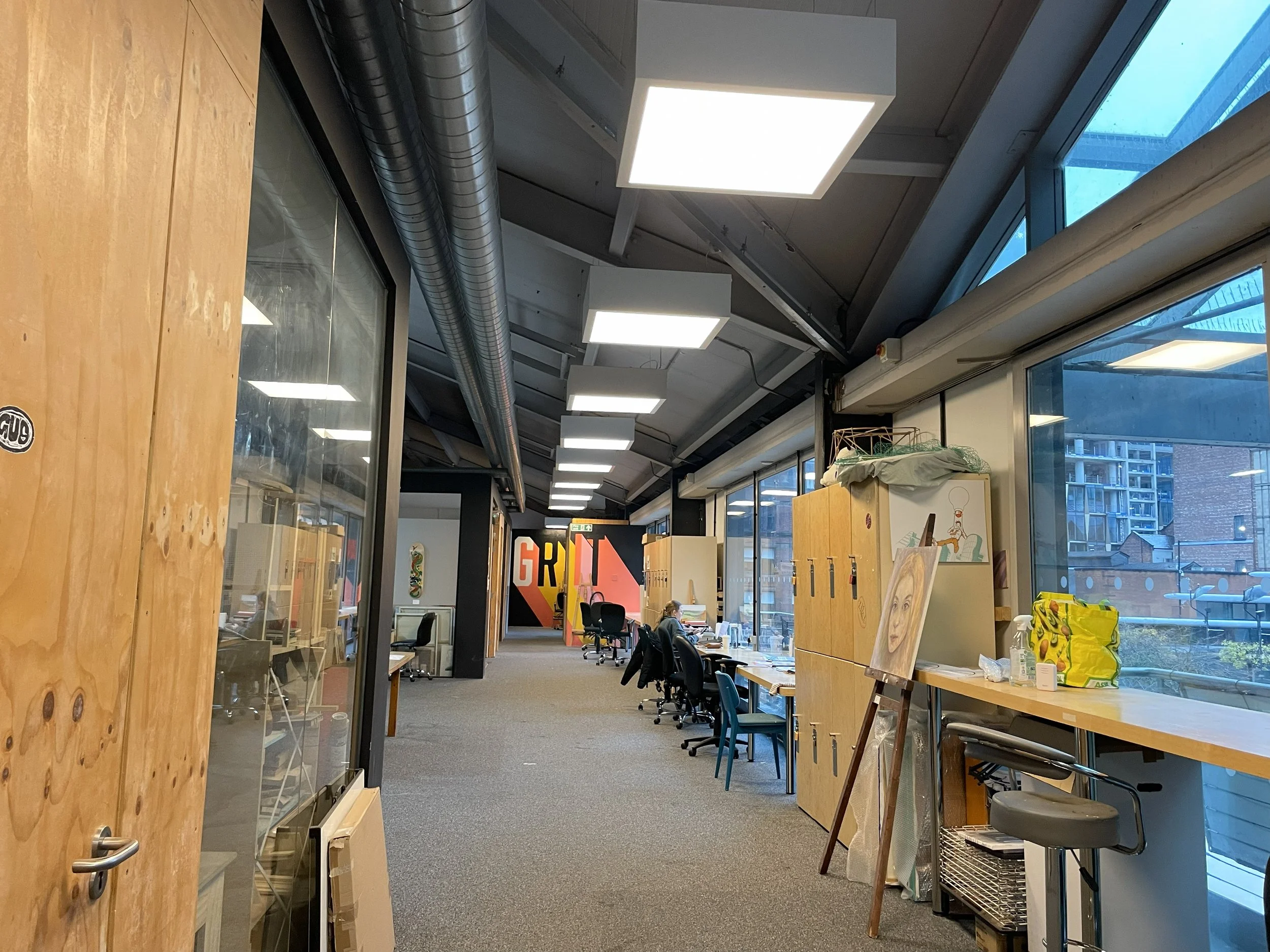
The GRIT Studios space in Manchester comprises dedicated studio units and a loosely programmed communal zone which is open to a cohort of ‘Hot deskers’
GRIT Studios is an Arts organisation and communally occupied Artists’ studios which began in Stockport. Since its inception, the umbrella of studios has expanded to include sites in Stockport, Salford and Central Manchester. GRIT offers a ‘messy hot desk’ for a reasonable monthly fee. You pay a deposit upfront, after which you have access to the communal spaces, from 7am till 11pm at night (many coworking spaces stubbornly close at around 5pm). Although I am still new to the GRIT community, I felt immediately at home here. Every time I go into GRIT, something unexpected happens, in a good way. At the time of writing, atmospheric conditions in the studios are jovial, artistic and not to mention, ambiently chilly. A strong sense of humanity exists within the GRIT Studio confines. Despite the cold, a box of hot water bottles (with fluffy covers) are left out. When fellow artisans show their faces, they stride around quickly, apparently off to attend to some urgent artistic matter. GRIT is located very centrally within Manchester and for the initiated, large full-height windows bring the city centre right up to your feet.
Every time I go into GRIT, something unexpected happens, in a good way.
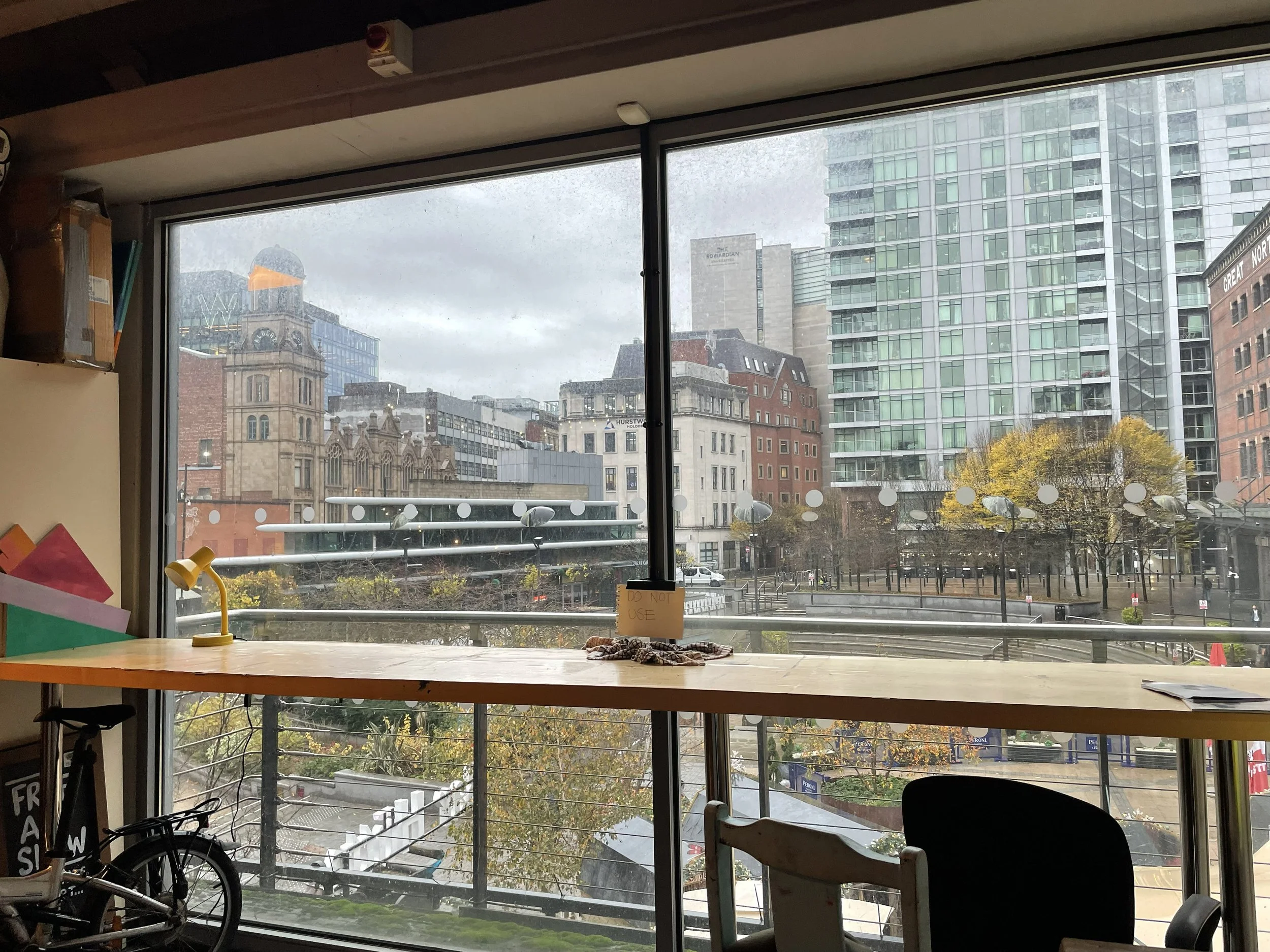
The view from my adopted work area at GRIT Studios in Central Manchester
Two weeks after joining GRIT, I was invited to join a group project. The Great Northern Warehouse, a neighbour and friend of GRIT, has made available a short lease of Unit 257 on Deansgate! The organisers of GRIT propose a Christmas Pop-Up Shop. The finalised cohort consists of a group of six, including Artisans who actively make ceramics, prints, jewellery and apparel. On the morning of 18th December 2025 I arrive at the ‘Business Management Suite’ to collect the keys to the unit. Opening the shop marks my first moments as a fully-fledged shop keeper. Time to chill…
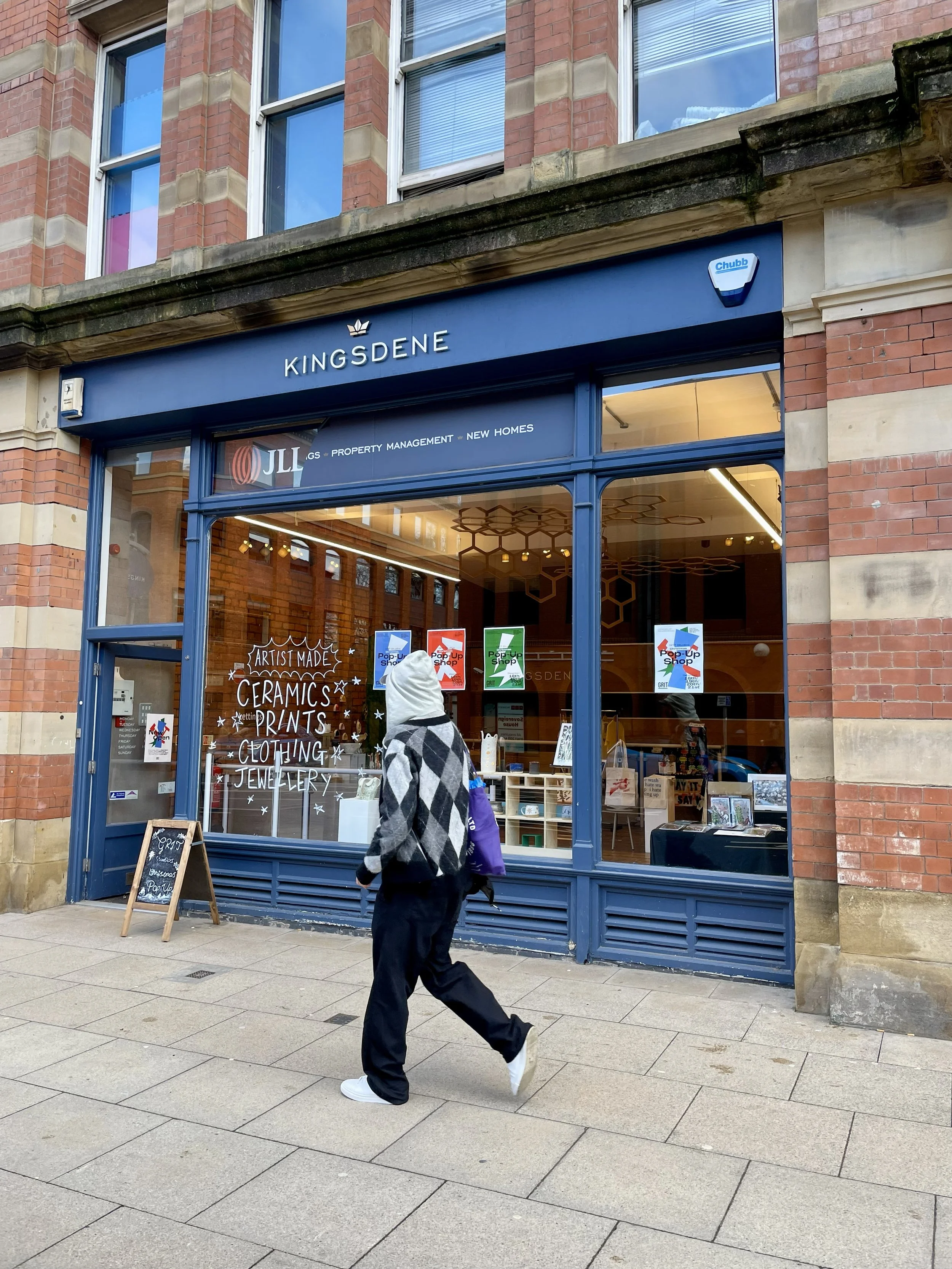
The GRIT Studios Christmas Pop-Up ran from 18th-21st December 2025 and is credited to the 6x artisans from GRIT Studios and their collective and combined efforts.
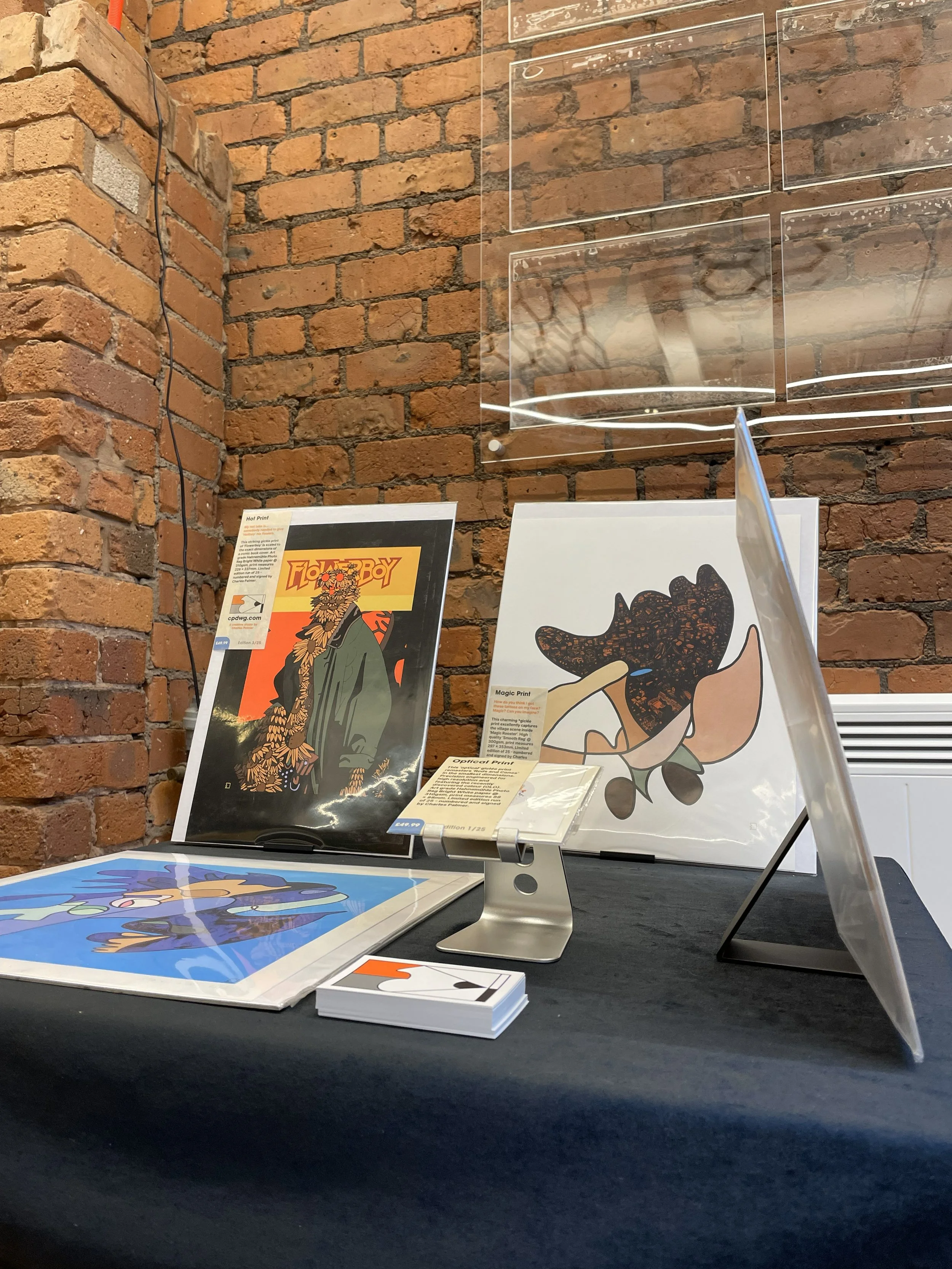
GRIT Studios Christmas Pop Up 2025 - cpdwg in focus
There certainly was a sense of relief and achievement on that first day. The simple joy of a Pop-Up Shop arises from a seemingly effortless blend of exhibit-come-market. For the UK general-going public (a peoples once dubbed by Napolean as ‘a nation of Shopkeepers’) this heady mix of Art and Shopping, culturally speaking, demands an interest bordering on mild obsession. With relatively sparse experience with markets, I recently learnt just how demanding the facilitation of this experience can be.
From the perspective of my own commercial offerings (on this occasion a selection of limited edition giclée prints) delicate preparations were made to ensure each item was retail-ready. Prints are individually packaged, with protective outer layer and hard backing. A customized information and pricing label, including a correctly corresponding edition number, is added to the print sleeve. For the tabletop presentation, appropriately sized stands (off the shelf, designed for the presentation of vinyl records) keep the prints standing upright and customer facing. A stack of branded networking cards open a window onto the world of the cpdwg.com website. Additional preparations included the sourcing and customization of a one-size-fits-all cpdwg gift bag. A lot to prepare within a weeks timeframe.

The cpdwg gift bag is an investment of time, labour and materials
To make things even more challenging, I decided to create and stock two new signed prints, made especially for this GRIT Christmas Pop-Up Shop. Optical Print is now my smallest print to date. If you look very closely, you may even see an entirely new colour in its makeup. Also, the newly revitalised Metallic Print, which is derived from my latest artwork ‘Heart of Gold’.
The simple joy of a Pop-Up Shop seems to arise from a seemingly effortless blend of exhibit-come-market.
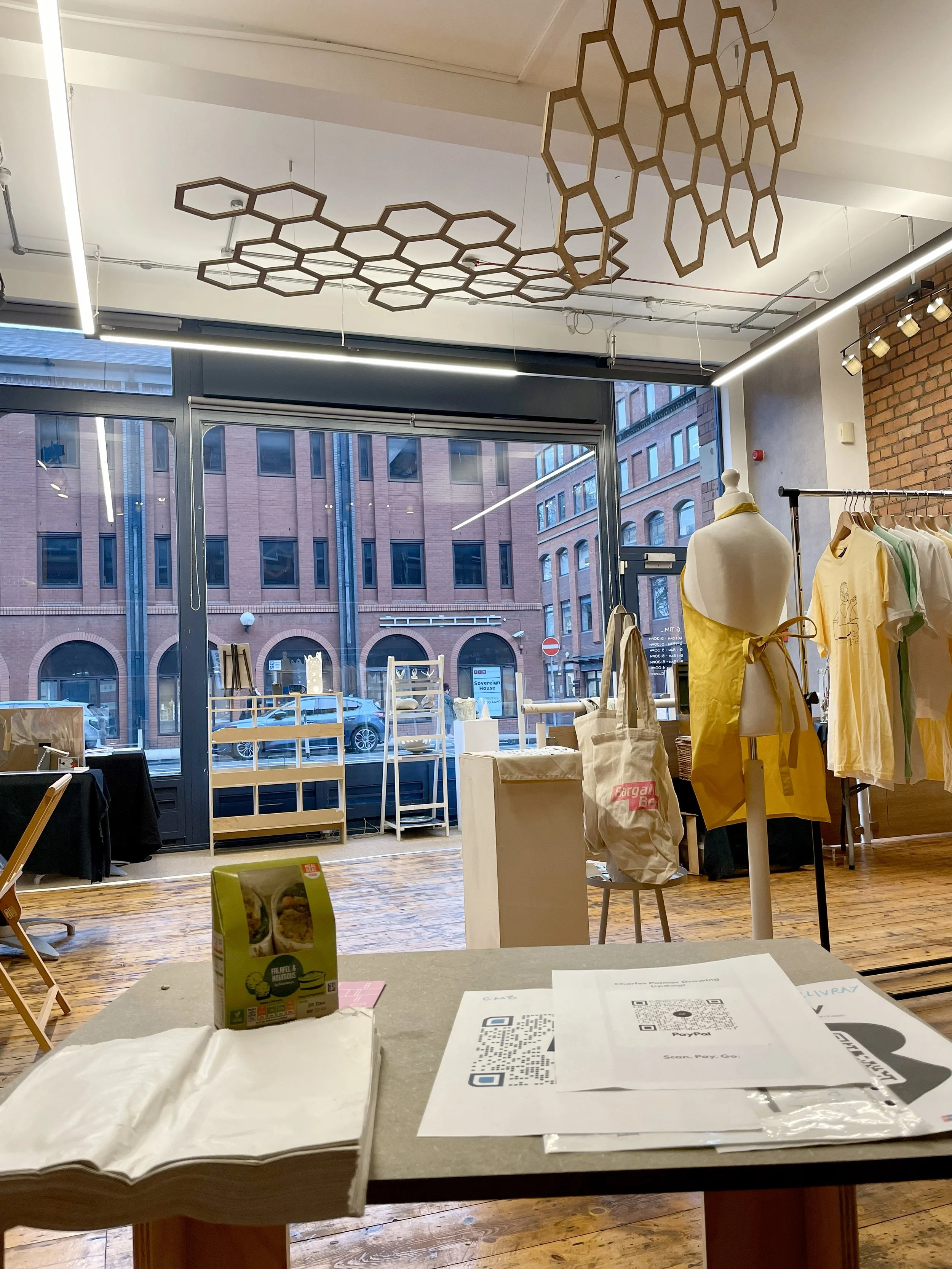
View from the perch of a fully-fledged shop keeper
Of course, I was not alone in hu’manning the GRIT Christmas Pop-Up Shop for the duration of those four days. Agnes and Judith occupy GRIT studios in Stockport and are producers of pottery and ceramics. Both are seasoned veterans in occupying market stalls in and around Manchester. At intervals and in-between serving customers, our conversations drifted onto the topic of markets themselves. For Artists like Agnes and Judith, markets provide a supplementary form of income, essential for maintaining their respective practices. However, I can sense that even when talking with experienced market traders like Agnes and Judith, they regard the frontier of markets as a somewhat ambiguous terrain.
For Artists like Agnes and Judith, markets provide a supplementary form of income, essential for maintaining their respective practices.
In the commercial space, Art can take on entirely new meanings. Art (as a function of culture) is to be reinterpreted through the lens of Utility. There is this tension between Art and Utility which I would mundanely describe as the struggle for resources versus the plight of altruism.
Judith tells me about the Altrincham markets. For a duration of time, the markets offered a rotating programme of alternating traders. This meant that every month, new traders had an opportunity to sell and the market would appear anew. For market-goers, this kind of rotating system created a sense of variety and choice, encouraging them to return frequently, if only ‘to see what’s new this month’. A bit like having a new Pop-Up Shop arrive every couple of weeks. With recent changes to the management of the market, this sparkle and sense of recurring novelty appears to have now nullified, as there is now a simplified roster in place, with a fixed programme of fewer traders. According to Judith, this change in management strategy has instilled the fanfare of market days with a distinct air of predictability.
It may be in the opposing sense of unpredictability and suprise where people find great and abundant joy in the spectacle of the Pop-Up Shop. I think the Pop-Up Shop speaks to our human need to experience change, possibilities and a sense of spontaneity in our lives.
I think the Pop-Up Shop speaks to our human need to experience change, possibilities and a sense of spontaneity in our lives.
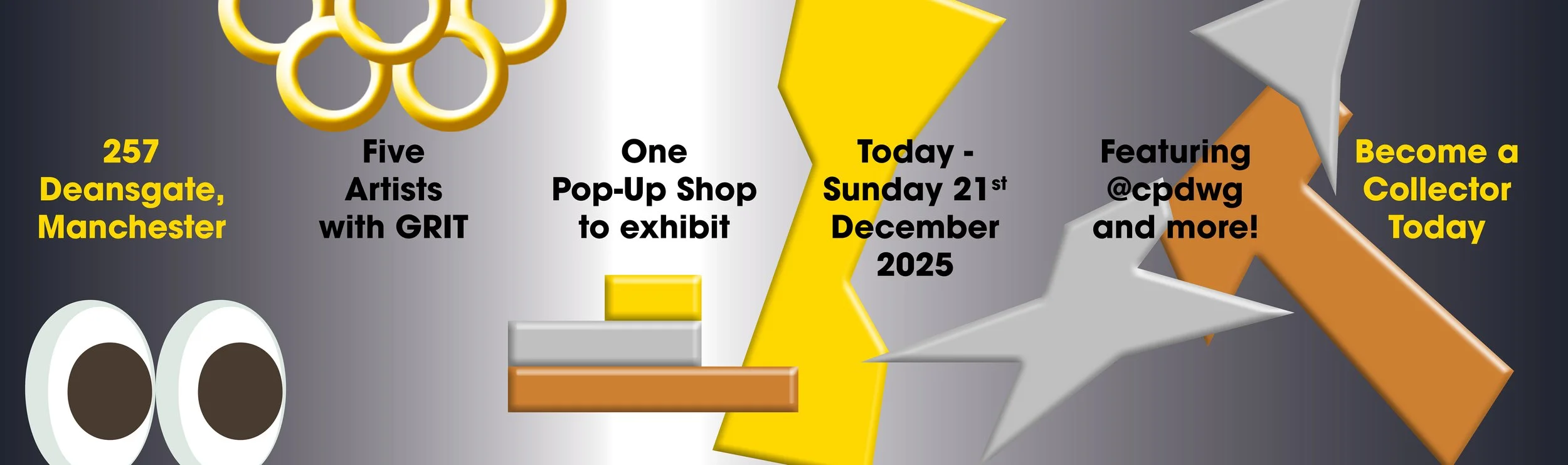
Panorama graphic containing 6x slides for my promotional Instagram Story
For me, the example of the Altrincham markets is a (timely) reminder that a boon of Arts and Culture in public life will always require love, care, attention and ultimately, resources. When entering into markets, Artisans are required to make their investments upfront. The expectation of a return on these investments might seem to rest on certain reasonable expectations, but for most, it is a calculation built on hopes. Agnes describes her strategy to offer certain ‘low hanging fruits’ i.e. larger batches of smaller priced items (starting at around £10 for one of Agnes’ ‘Chonky Bears’) as designed to entice market-goers who possess limited and finite amounts of disposable income.
In truth, and despite the adopted strategies of seasoned traders, the economic reality of the market is a mysterious business, mired by losses. Agnes tells me, if ‘Chonky Bears’ do well this weekend, making more ‘Chonky Bears’ this week will not neccessarily yield the same results, next weekend. Weighing up the see-saw of in-person markets, versus the allure of e-commerce (a cyberspace that demands a plethora of hidden fees) Agnes and Judith seem to be a little disoriented. The commercialisation of Art, which brings Art into the closed circles of Utility, poses a range of interesting challenges for practicing Artists.
The commercialisation of Art, which brings Art into the closed circles of Utility, poses a range of interesting challenges for practicing Artists.
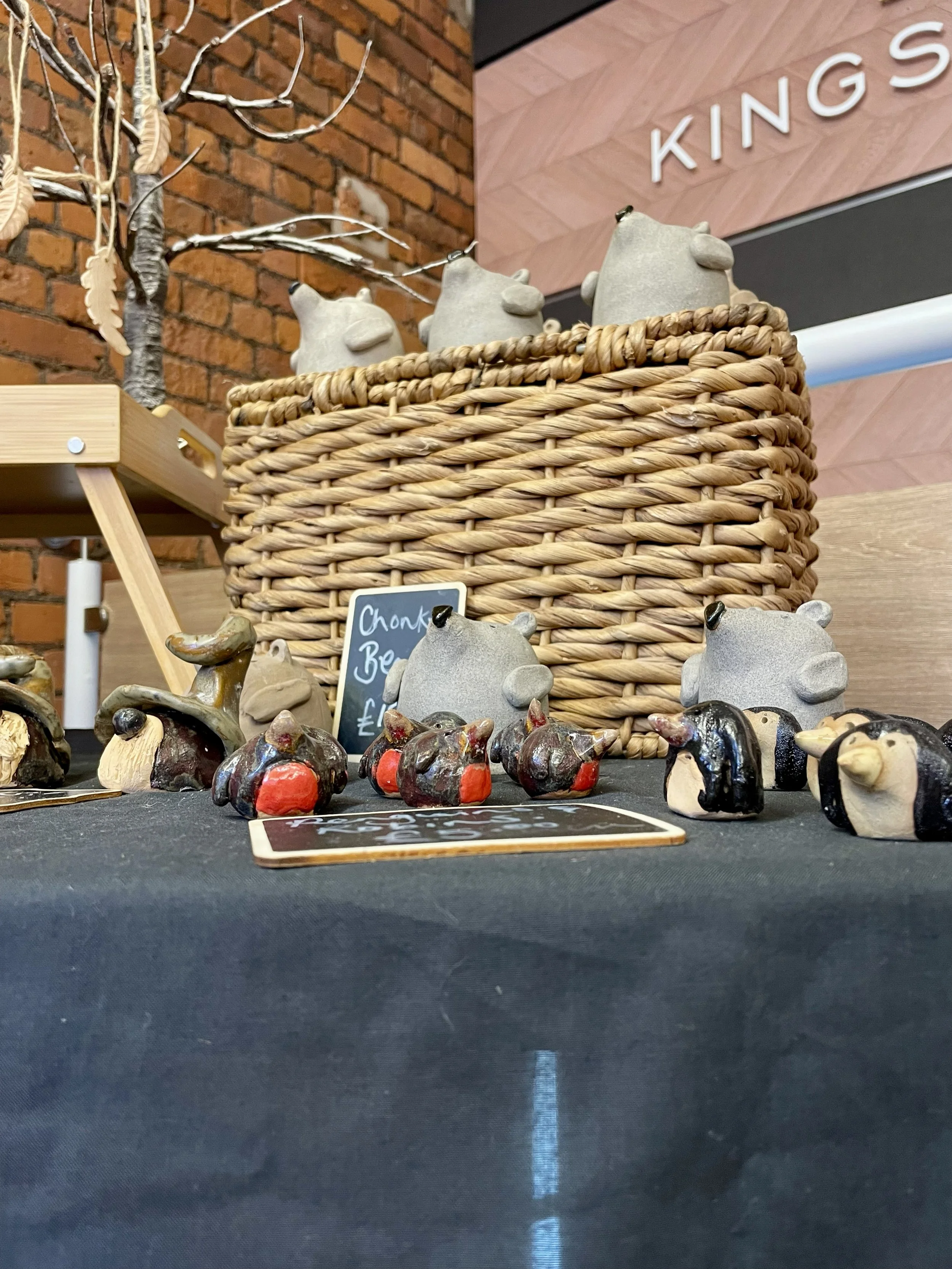
Agnus’ ‘Chonky Bears’ retail at £10 - but should they be priced at £15?
Within the market environment, the cult of Utility has the potential to further devalue Art itself. The general-going public, who possess certain consumer-based expectations, do not neccessarily buy or collect Art pieces regularly (this is also true for many Artists themselves).
When Art is displayed in its own right, as a symbol of purity, the stakes rise dramatically. A customer was shocked to learn that Judith’s labour of love (a delicate and ornate structure resembling a bodice) was priced just north of £100. In the same breath, Judith quietly bemoans examples of similarly priced (and mass produced) wares that fill the shelves of department stores like John Lewis; items which carry designer appeal, but do not evoke the same sense of shock and awe in consumers. In the ceramics space in particular, so-called ‘Utility-wares’ are an attractive commercial option and creative fork in the road for makers, who are otherwise invested in serving the greater good that comes with ‘Art for Art’s sake’. Makers must be Artists (with a capital A) as well as Designers of Artistic objects. Here I recall the words of the legendary Designer Bruno Munari, who suggested that ‘Designers will become the Artists of the 21st century.’
When Art is displayed in its own right, as a symbol of purity, the stakes rise dramatically.
To adopt a more deliberately balanced outlook, I am suggesting that the real benefit and purpose in these market spaces is in volunteered philanthropy (Art for public good), in-person marketing and communication (through exhibiting and meeting with audiences directly) and commerce (the outside possibility of sales). In conversation with Agnes and Judith, we speculate over the right way to keep our Pop-Up Shop. Is Agnes willing to negotiate a discount for an interested party? If you were a shop keeper, would you keep a low profile, or greet customers in the doorway?
In between shifts, my mind begins to wonder again to the Deansgate-Castlefield skyline. Was that a figure I saw on a high wire? Or was that pure imagination, caught in reflections on glass? In this fleeting moment, the domineering commercial spirit of Deansgate-Castlefield seems to subside, revealing in its space a human aspiration that is working silently for itself, regardless of what is going on overhead.
Are you a Creator or Collector who lives or works in Deansgate-Castlefield? If you are a member of the ‘general-going’ public, what do you love about the humble Pop-Up Shop? With comments now enabled on my blwg, why not share your novelty thoughts with other readers?
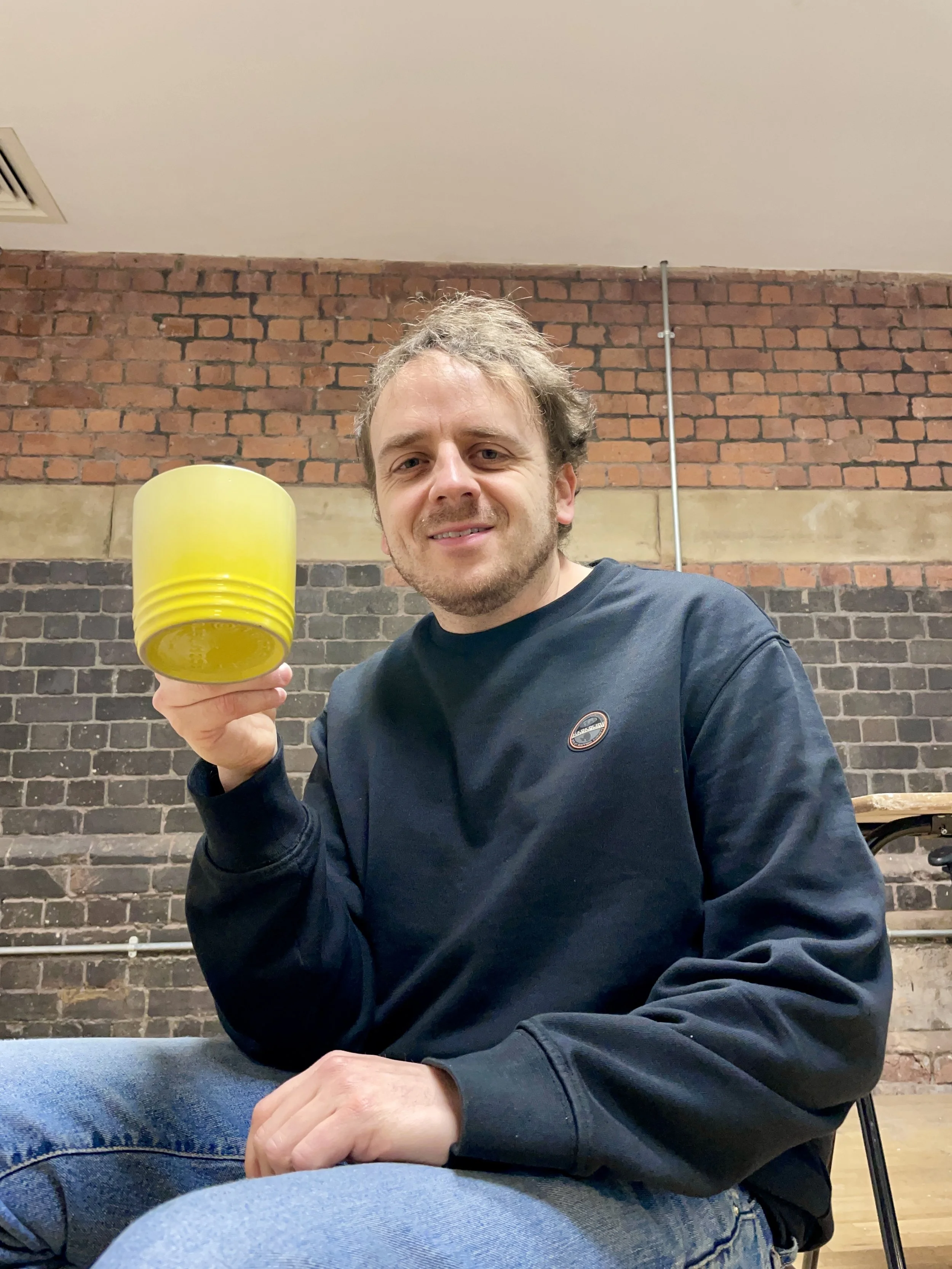
The author at GRIT Studios in the New Year 2026
Writer’s AI Disclaimer: No part of this article was written by or with the assistance of ‘Artificial Intellegence’ or any existing LLM technologies.
All photographs in this article by Charles Palmer © 2026.